Solar Screen Mesh Guide: 80% vs. 90% Sun Blockage and Which Color to Choose in Phoenix
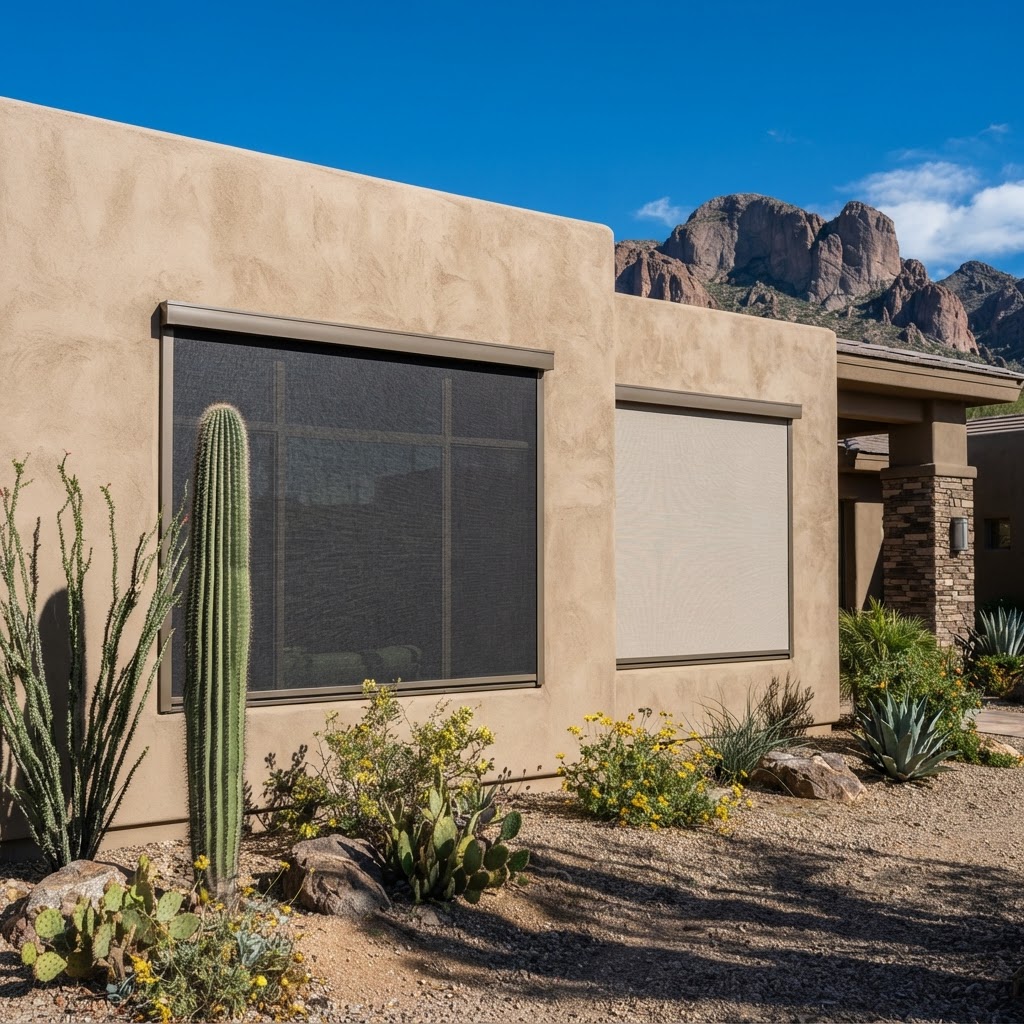
The best solar screen mesh for Phoenix depends on the window: 90% sun-blockage mesh is the strongest choice for west- and south-facing glass that bakes all afternoon, while 80% mesh is a smart pick when you want more daylight and a clearer view. Color matters too — darker mesh generally gives the clearest view out and the least glare, while lighter mesh looks softer from the street. Here's how to choose, window by window.
The Short Answer
- West-facing (living room, kitchen, bedrooms) — Typical best fit: 90% mesh — maximum afternoon heat reduction
- South-facing with no overhang — Typical best fit: 90% mesh, or 80% if you want more winter light
- East-facing — Typical best fit: 80% mesh — morning sun is milder, so keep more daylight
- North-facing — Typical best fit: 80% mesh (or a standard bug screen) — little direct sun
- Home office / TV room — Typical best fit: 90% mesh for glare control
- Windows with a great view — Typical best fit: Darker color in 80% or 90%, based on the sun exposure
What the Percentage Actually Means
The number on a solar screen describes how much of the sun's energy the mesh is designed to block before it reaches the glass. A higher number means a tighter weave and more blocked heat, glare, and UV. A lower number lets more light and view through.
- 90% mesh: Strongest heat and glare reduction. Rooms feel noticeably darker and cooler on hot afternoons, and daytime privacy from the street is excellent.
- 80% mesh: A balance of heat control and brightness. Rooms stay more naturally lit and the view out is a bit clearer.
Exact options and performance vary by mesh fabric and manufacturer, so ask for the specific rating of the mesh you're quoted. We'll walk you through the choices for your home.
80% vs. 90%: How to Decide
- Start with the sun, not the room. Western and unshaded southern windows take the harshest direct sun in the Valley, so they benefit most from the higher blockage.
- Think about how you use the room. Bedrooms, TV rooms, and home offices usually want the most glare control. A breakfast nook where you love natural light may be happier with 80%.
- Consider shade you already have. A patio cover, mature tree, or deep overhang already does part of the job, which can make 80% plenty.
- Don't forget the whole house. Many homeowners use 90% on west and south windows and 80% elsewhere. Mixing is fine as long as the color and frame match.
Choosing a Solar Screen Color
Color changes how the screen looks from the street and how clearly you can see out.
- Black / charcoal — What to expect: Typically the clearest view out and the least glare; a clean, modern look
- Dark brown / bronze — What to expect: Warm look that blends with stucco and desert-tone exteriors; good view-through
- Gray — What to expect: Neutral and versatile; works with many exterior palettes
- Light tan / stucco tones — What to expect: Softer from the street, but generally a less clear view out than darker mesh
Frame color matters just as much for curb appeal. Match frames to your window trim, and check HOA rules before you order — see our guide to HOA rules for solar screens in the Phoenix Valley.
Will I Still See Out?
Yes. Solar screens are designed to be seen through from the inside during the day, and they provide privacy because it's harder to see in from outside in daylight. At night with the lights on, the effect reverses, so keep blinds or curtains closed in rooms where you want privacy after dark.
Do Solar Screens Need to Be Custom-Sized?
Yes, for a good result. A screen that doesn't fit tight in the frame lets sun and bugs slip through the edges and rattles in the wind. Custom screens are built to your measurements, with frames sized for each window. You can order custom solar screens online at Screens2Go, or have us measure and install.
Common Mesh-Choice Mistakes
- Going 90% on every window without thinking about daylight in north- and east-facing rooms
- Choosing color only for the street view and ignoring how clearly you can see out
- Skipping frame matching, which hurts curb appeal and can trigger HOA pushback
- Mixing mesh brands across the house, so colors and sheen don't match
- Ordering without measuring twice — even a small gap defeats the screen
Serving Homeowners Across the Phoenix Valley
Window Screen Guys builds custom solar screens, bug screens, and screen doors locally and serves Phoenix, North Phoenix, Scottsdale, North Scottsdale, Peoria, Surprise, Glendale, Cave Creek, Anthem, Mesa, Chandler, Gilbert, Tempe, Goodyear, and Buckeye. Licensed Arizona contractor, ROC #362719.
Get Solar Screens Matched to Your Windows
Not sure whether your west windows need 90% or your east windows can go lighter? We'll look at your home's exposure and recommend a mesh and color for each window.
- Want it done for you? Request a free quote for measure-and-install service, or call (480) 771-6091.
- Prefer DIY? Configure custom solar screens with instant pricing at Screens2Go and pick them up or have them delivered.
Frequently Asked Questions
What is the best solar screen mesh for Phoenix?
For west- and south-facing windows that get strong afternoon sun, 90% sun-blockage mesh delivers the most heat and glare reduction. For east- and north-facing windows, or rooms where you want more natural light, 80% mesh is often the better balance.
What is the difference between 80% and 90% solar screens?
The percentage describes how much solar energy the mesh is designed to block. 90% mesh blocks more heat, glare, and UV and makes rooms darker; 80% mesh lets in more daylight and gives a slightly clearer view out while still cutting a large share of the heat.
What color solar screen is best?
Darker colors like black, charcoal, and dark brown typically give the clearest view out and the least glare. Lighter tan tones can look softer from the street but generally reduce outward visibility. Choose a color that suits your exterior and your HOA's rules.
Can I use different mesh percentages on different windows?
Yes. Many homeowners use 90% on west and south windows and 80% on east and north windows. Keeping the color and frame consistent keeps the exterior looking uniform.
Will solar screens make my house too dark?
They reduce brightness, especially 90% mesh, but you can still see out and rooms stay usable. If you want more daylight, 80% mesh or a lighter application on shaded windows keeps rooms brighter.
Do solar screens give privacy?
During the day, yes. It is harder to see into the home from outside in daylight. At night with interior lights on, the effect reverses, so use blinds or curtains where you want privacy.
Can I order custom solar screens online?
Yes. You can configure custom-sized solar screens with instant pricing at Screens2Go (screens-2-go.com), or request a free quote at windowscreenguys.com/contact for measure-and-install service.
Need help with your windows?
Shop Screens2Go