
The Complete Guide to Durable Screen Doors
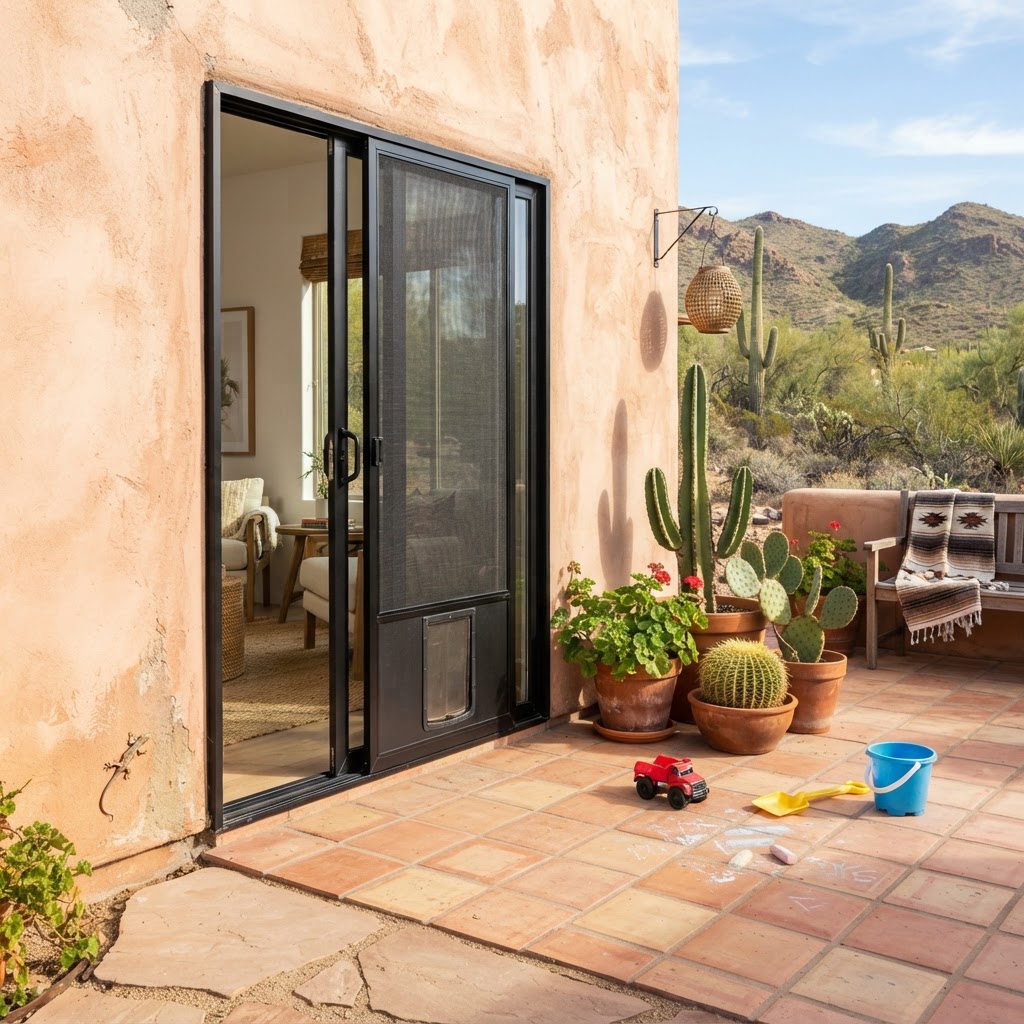
The single biggest predictor of how long a screen door lasts on a high-traffic entrance isn't the frame color or the mesh pattern — it's whether the rollers that let the door slide are metal or plastic, because plastic wheels flat-spot, crack, and wear out under Arizona heat and grit years before a metal roller will. Everything else about a screen door's durability follows from a handful of build choices like this one.
What Actually Determines Durability
Four things decide whether a screen door holds up to daily family use or starts failing within a year or two:
- Roller/wheel material — metal vs. plastic, covered in detail below
- Frame gauge and material — thicker-walled aluminum resists bending and racking at the corners under repeated slamming
- Mesh type — standard fiberglass mesh tears under pet claws and kids running through; pet-resistant or heavy-duty mesh holds up far longer on busy entrances
- Hardware — hinges, closers, latches, and handles that are rated for frequent cycles rather than occasional use
Metal Wheels vs. Plastic Wheels: Why It Matters
Most budget sliding screen doors ship with injection-molded plastic rollers. In Arizona, that's a problem for two reasons: UV exposure makes plastic brittle over time, and summer track temperatures that regularly exceed 150°F can soften or deform a plastic wheel enough to create a flat spot where it sits. Once a wheel develops a flat spot, the door starts to bind, drag, or jump the track — and a sticking door gets forced, which accelerates every other kind of wear in the system.
Window Screen Guys builds our screen doors with metal ball-bearing rollers as standard, not an upsell. Metal rollers don't soften in heat, don't flat-spot from sitting in one position, and glide more smoothly over years of daily use — which is the difference between a screen door that still slides easily at year five and one that's been dragging since the first summer.
Frame Construction
Look for:
- Wall thickness — thicker extruded aluminum resists bending at impact points, especially corners
- Reinforced corners — welded or mechanically fastened corners hold up to slamming better than simple screwed butt joints
- A straight, true frame — a door that isn't square to begin with will always bind, regardless of roller quality
Mesh for High-Traffic and Pet Households
- Standard fiberglass mesh — fine for low-traffic doors, but tears easily under claws or a shoulder bump
- Pet-resistant mesh — a tougher, often vinyl-reinforced weave built to resist scratching and pushing; see our complete guide to pet-resistant screen doors for the full comparison
- Heavy-duty or security mesh — the toughest option, typically for doors that see the most abuse
Hardware That Holds Up
- Door closers rated for high-cycle use won't wear out from being opened and shut dozens of times a day
- Latches with a solid catch resist loosening from repeated slamming better than lightweight spring latches
- Hinges sized to the door's weight and width — an undersized hinge on a heavy door sags over time
A Quick Buying Checklist
- Ask specifically: metal or plastic rollers?
- Check the frame's wall gauge, not just its appearance
- Match the mesh to your household — standard, pet-resistant, or heavy-duty
- Confirm hardware is rated for daily, high-frequency use, not occasional opening
Repair or Replace?
If a door is binding because of a worn plastic roller but the frame and mesh are otherwise sound, swapping to a metal roller system can solve the problem without a full replacement. If the frame itself is bent or racked, replacement is usually the better long-term fix. Our screen door repair vs. replacement guide walks through how to tell which situation you're in.
Built for Daily Use, Not Just the Showroom
Window Screen Guys installs screen doors with metal ball-bearing rollers as our standard build, for busy entrances across Phoenix, Scottsdale, Chandler, Gilbert, and the surrounding Valley — licensed Arizona contractor, ROC #362719.
Call (480) 771-6091 or request a free on-site quote.
Want to compare styles and pricing yourself? Browse Screens2Go.
Frequently Asked Questions
Why do plastic screen door wheels fail faster in Arizona specifically?
Summer track temperatures regularly climb past what plastic is rated to handle without softening, and UV exposure makes plastic more brittle over time. A plastic wheel that would last for years in a milder climate can flat-spot or crack within a season or two of Arizona heat.
Can I just replace the wheels on my existing screen door instead of buying a new one?
Often, yes, if the frame and track are otherwise in good shape. Swapping plastic rollers for metal ones is a straightforward fix that can meaningfully extend the life of an existing door.
What mesh should I get for a house with both kids and a dog?
Pet-resistant mesh is usually the better starting point, since it's built to resist both clawing and general rough use, which covers most of what a busy household with kids and pets puts a screen door through.
Is a more expensive screen door always more durable?
Not automatically — price doesn't guarantee metal rollers, reinforced corners, or upgraded mesh. Ask about the specific build details above rather than relying on price alone.
How often should screen door hardware be checked or serviced?
A quick check once or twice a year — rollers, hinges, and latches — catches most problems while they're still a simple fix rather than a full door replacement.
Need help with your windows?
Shop Screens2Go